Tuesday, April 29, 2014

Helping a slow growing chick

Holly, the gold sex-link chick I bought from IFA, seemed to be doing OK, but wasn't growing.  Here's what I did (after consulting the wisdom of backyardchickens.com).

  1. fed her mash three times a day.  I made the mash by mixing warm water with her starter feed.  I just put it in a lid from a peanut butter jar in the brooder for all the chicks to enjoy.  She really liked this.
  2. Fed her a hard boiled egg every other day.  Instead of mash for breakfast, I fed her (and the other chicks) a freshly boiled, mashed hard boiled egg.  I mash the egg with a fork.  I only leave it in the brooder for about half an hour then throw away what they don't eat.  I do it every other day since I had read that feeding chicks too much hard boiled egg can cause diarrhea or constipation.  I had also read that chicks shouldn't be fed hard boiled eggs that had been refrigerated since bacteria can grow. It isn't enough to harm humans, but it can harm chicks. (Don't know if this is true, but I didn't want to take chances.)
  3. Bought a back up chick.  Since the sex-link was the only one I knew for sure was a hen, I went back to IFA and bought a back up golden sex-link chick in case she didn't make it.  I think the other chick helped because she shook up the pecking order (the silkie had been picking on Holly) and she was brown too.  All the other chicks were black and I think it made the golden sex-link stand out.
  4. Bought a food scale from Wal-mart to weigh her.  It was reassuring to be able to tell that she was getting heavier.
  5. Prayed.  This definitely helped me keep a good perspective.
Right now Holly is growing.  She is almost as big as the bantams now. (She was much smaller.)  She is about 2/3 the size of the other sex-link. I'm hoping she grows up to lay many delicious eggs.

Updated (6/5/14): I switched over to fermented feed, which is about the same as mash in my mind.  Holly is only slightly smaller than the other sex-link.

Tuesday, April 22, 2014

My Chicken Breeds

I had a series of posts about what kind of chickens to get.  Here's what I ended up with:

  • Gold Sex Link (2)- I bought a back up one since my original one didn't seem to be growing
  • barred rock - this chick is a character and huge.  Coloring says hen, but attitude says roo, so I'll have to wait and see.
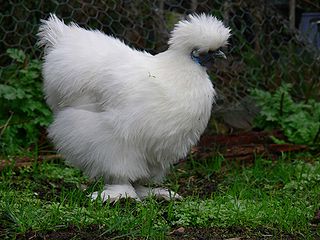
  • silkie - black and fluffy.  a little bit of a bully
  • cochin - black and fluffy.  This one was supposed to be a silkie, but the nice lady at IFA knew nothing about chickens
There's a chance the barred rock and at least one of the bantams will be a rooster, so that will take me down to a manageable number of chickens.  I don't think I'll be able to keep all five.   If I did it over again, I might have just gotten all sex links, I'm having trouble with the "is it going to be a roo" stress.

If you build it, they will come

I've been building my chicken coop.  I started the last week in February and am almost done now, mid April.  I built the Purina chicken coop plan.  I modified it a to be a little smaller 3x4 since that's what my husband was ok with.  

I'm torn at this point if I wish I hadn't made the coop smaller.  I'm not very strong, so I'm not sure I would have been able to handle building the slightly larger coop.  On the other hand, I ended up with 5 chickens, so at least one of them will have to go.  

I strongly recommend having a miter saw and jig saw for building the coop.  It was a million times easier cutting the lumber with the miter saw than trying to use a circular saw and straight edge.

One thing that worked well for me was to attach the legs to the floor, we set the floor on a bench we had then attached the legs.  We were able to get the legs all at the same height that way.

The other thing I learned is that this coop cost a lot more than planned.  It wasn't the wood either.  The screws, nails, hinges, and locks really add up fast.  I ended up using two boxes of roofing nails and three and a half boxes of deck screws.  Plan on it costing about double what you think it should.  

Monday, August 19, 2013

Rethinking the chicken breeds I want

I've been rethinking the chicken breeds I want.  Egg production wasn't important to me originally, but I've decided I would have trouble having chickens and still having to buy the majority of my eggs.  That means I have to decide between the silkie and the buff orpington.

The problem with the silkie is that they really don't lay at all.  It would be strictly a pet, but it is a bantam, so it wouldn't eat as much as the other chickens.  It also might have problems in the winter (either getting muddy or wet).  It also wouldn't be as destructive when free ranging.

The problem with the buff orpington is that they lay, but they are known for going broody.  They are also quite large (8 pounds).  This means I would have a large bird that eats a lot that isn't laying all that much (3 eggs a week according to Henderson's guide).  Based on looks, it is my favorite chicken.

Here are the current breeds I'm considering:
1. Silkie

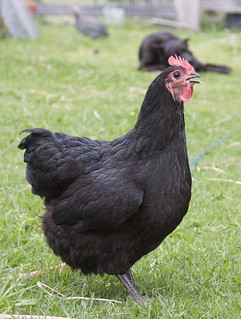
2. Australorp - the Australian version of the orpington.  It is usually black and in my opinion not as pretty.  But it lays 4 eggs a week and doesn't go broody.  6.5 pounds


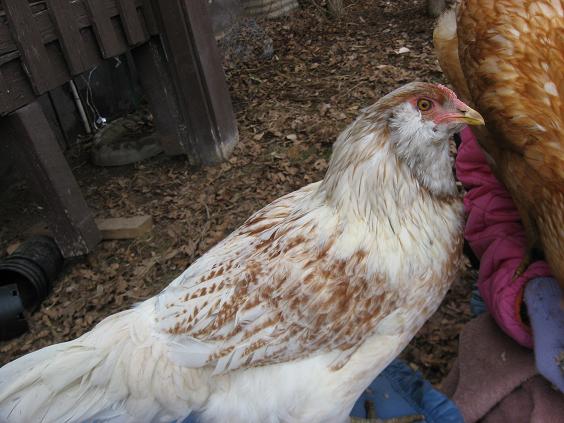
3. Easter Egger - four eggs a week.   5.5 pounds.  I really don't like how they look though.

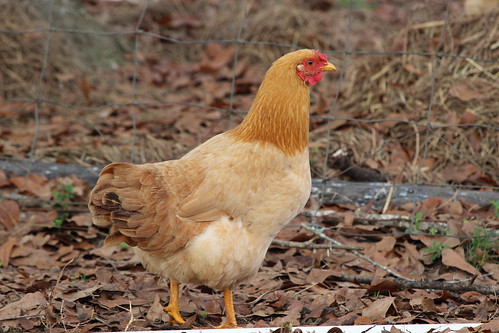
4. Red Sex Linked (golden buff) - five eggs a week, but bred for production, so after two years they start having problems. 4 pounds

5. Buff Orpington - three eggs a week and goes broody. 8 lbs
(alanreeves001)


I'm currently leaning towards the buff orpington, australorp and the golden buff.

Best case senario, I would be getting 9 eggs a week, enough for each of us to have one egg, plus three for baking.  I might still have to supplement, seems like we go through about a dozen eggs a week, but the majority of eggs would be coming from our flock.

Tuesday, August 6, 2013

Jack Horner: Building a dinosaur from a chicken


My kids think chickens are cool based on this talk.

Considering bantam breeds

Its been two weeks since I thought I might want chickens.  I originally wanted two full seized chickens and a silkie, but now I'm rethinking that.  I mostly want chickens as pets.  The eggs are nice, but I'm more interested in them eating bugs and weeds and possibly getting some free fertilizer.  I've read some things about how many greens chickens can eat, which translates as lawn and garden damage.  However, the bantams, because they are smaller, don't do as much damage and poop less.  I would also be able to get away with a smaller coop and a smaller run, a great thing since my husband isn't sold on chickens.

I'm limited to breeds either available locally or from mypetchicken, since I only need three and I can only have hens.  

Here are my choices:
Silkie

Bantam easter egger

Bantam barred Plymouth rock


The last two are cold hardy, so hopefully they will keep the silkie warm.

Backyard Chicken Coop

I need to figure out what kind of chicken coop to build.  Because I live in place with hot summers and cold, snowy winters, I am trying to think things through.

Space per chicken

The conventional answer for how much space is 4 feet per bird inside and 10 feet per bird outside.  For my three hens, it would be 12 square feet, so 3 ft x 4 ft.  I'll probably expand that to 4 ' x 4' because lumber seems to come in 8' lengths.  Also, since it snows here in the winter, the birds will have to spend some days indoors and I don't want them to be too cramped.  The run will need to be at least 30 square feet, but if I build an elevated coop like I hope to, I only need an additional 14 square feet of run that isn't under the coop.

Direction

I am planning on the door to the coop facing east.  It is very windy where I live.  The wind is generally from the north (cold storms) or from the south (warm storms).  I would put ventilation holes on the west and east.  We occasionally get western storms, but they are less common. I wonder if I could put an awning or something over the ventilation holes to prevent the wind from blowing straight in, or maybe under the eaves of the roof.  I also want a nice south facing window to let in the heat in the winter.

Winter

Winter here can be cold.  Although I want to use the deep litter method, It would be on a wood floor, so it wouldn't compost.  It will only offer insulation, not additional heat.  I think if the coop is insulated I will be able to get by just fine.  I am considering getting some solar panels to use to run a light or maybe a heated water dish.  Probably won't worry about that until I see how the first winter goes.  I may also need to put up some plastic or wood along the run to block the wind and snow.  Don't know if I'll need to cover it or not.

Ventilation

Chickens produce lots of water vapor and ammonia, so they need ventilation all year round.  I need at least 1 sq ft of ventilation per chicken.  I'll also need extra vents for the summer that can be covered over in winter.

Clay

Below the few inches of dirt we trucked in for the lawn is heavy clay. I need to make sure the chicken run doesn't become too muddy.

Coop design

I'm still looking for coop designs.  Ideally I would get a kit, but I may need to build my own.  I liked this plan pretty well.


Here's another one from purina that seems straight forward.


Run design

The run will go under the coop then extend out from it.  I am thinking several inches of road base to let it stay dry.  It will need to be covered on top as well to stop hawks (love watching them, but don't want to see one that close up).  My yard is sloped and the chicken coop will be down towards the bottom of the slope.  I might also have to dig a trench around it and make a french drain, but I'm hoping to avoid that.

Yard Changes
The yard is going to have to change to allow a place that is 4'x 8' for the chickens.  I want the run and coop to be in the sun for the winter so that the snow will melt out of the run.  This excludes the edges of the yard.  The back of my yard tends to get soggy.  So I need to find somewhere close to the edge of the yard, but not too close.  I also have to accept there will be no grass there :)  I also need to talk my husband into adjusting the sprinklers so the run doesn't get wet and start to stink.